
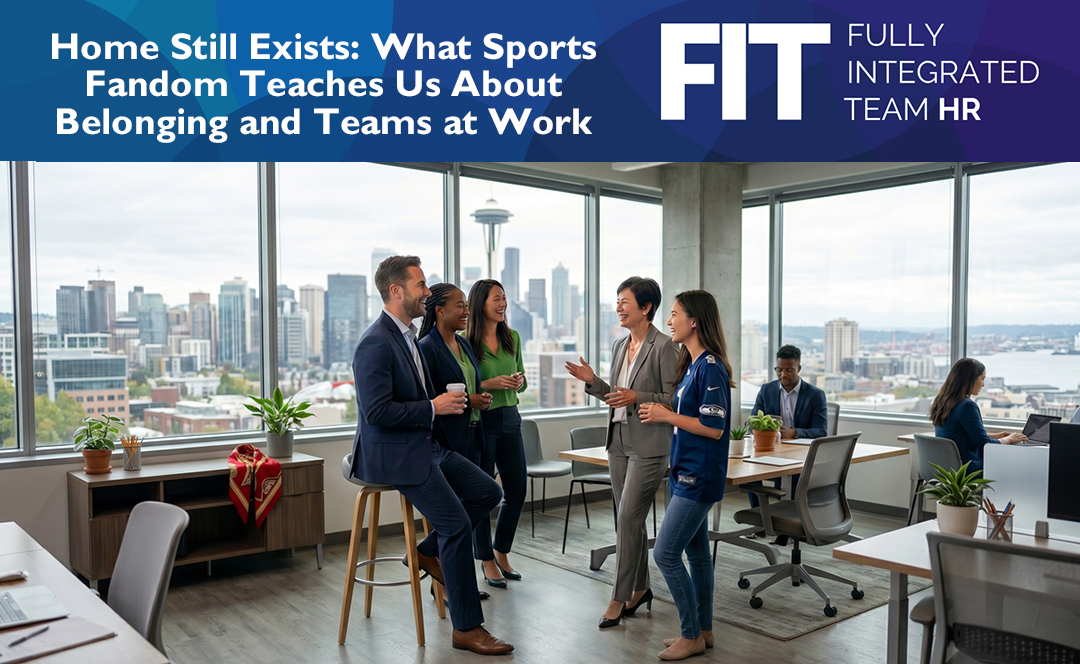
Building a strong workplace culture in the Pacific Northwest requires creating a sense of shared identity and deep loyalty. FIT HR provides fractional HR consulting to help Seattle businesses foster authentic employee engagement, turning disconnected groups of workers into highly committed, high-performing organizational teams.
Table of Contents
I’m a lifelong San Francisco 49ers fan.
I grew up in a family that loved the 49ers. My sister and I formed our sports team alliances because that is who my dad and brother followed, so we loved the teams they did. All of my friends loved them too, and so did their families. It was a huge community of people rooting for the same team. Sundays were full of noise, voices raised at the TV, and the familiar rhythms of wins and losses.
It was part of growing up. It was part of belonging.
When I moved to Washington State at 24, I left all of that behind. In the late ’80s and early ’90s, I was a manager in the local hospitality industry. The hours were long, the responsibility constant, and the work isolating in ways I didn’t fully recognize at the time. I was building a life in a new place, but I was far from the people and community that had shaped me.
The games on Sunday in the lounge were always packed, everyone watching the Seattle Seahawks. The space was full of the proud, loud energy of the “12th Man,” a kind of shared enthusiasm that made it clear where I was geographically, even if my heart still lived somewhere else.
And then my home team started winning.
The 49ers won the Super Bowl four times during those years. On the surface, it looked like football. But for me, it was something much deeper. Every win felt like a reminder that home still existed, even if I wasn’t there. That team became my connection to the people, memories, and places that had defined my early life.
It was portable belonging. Proof that even as everything around me changed, parts of who I was remained intact. A long time has passed since then, and I’m still proudly 49er Faithful.
Why do shared identities and team loyalty matter for Seattle employees?
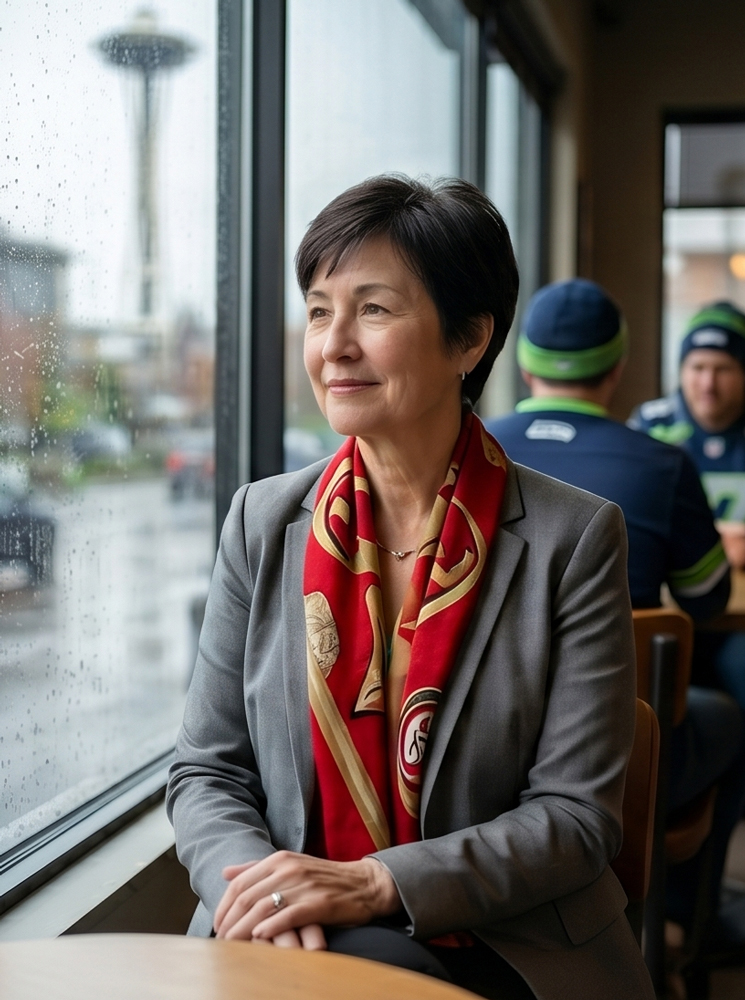
From a cultural and sociological perspective, sports teams play a powerful role in people’s lives. They offer a shared identity that often forms early, long before we’re consciously choosing our affiliations. Teams are inherited through family, geography, and community. For many of us, liking a team was a way of saying: I belong here.
Even in a deeply divided country, sports teams remain one of the few places where people still rally around something together. You may disagree on politics, values, or worldviews, but on game day, people show up in the same colors, root for the same outcome, and experience the same joy or disappointment.
Sports fandom also teaches loyalty in a way few other things do. Anyone can show up when a team is winning. Real attachment is built in the losing seasons, the rebuilds, and the near-misses. Staying through disappointment creates a bond rooted in endurance, not convenience. That kind of loyalty doesn’t disappear when we move or change careers. It becomes part of our personal story.
How does team culture impact employee retention in the Pacific Northwest?
As human resources consultants, we spend a lot of time talking with business owners about engagement, culture, retention, and performance. But underneath all of those corporate concepts is the exact same human need that fuels sports fandom: the need to belong to something that actually matters.
People don’t commit to organizations because of attendance policies or perfectly drawn organizational charts. They commit because they feel connected to the people around them, believe their daily work matters, trust the leadership guiding the team, and feel part of something bigger than themselves.
This idea shows up again and again in modern leadership thinking. The book The Five Dysfunctions of a Team by Patrick Lencioni emphasizes trust as the absolute foundation of effective teams, while Leaders Eat Last by Simon Sinek explores how people thrive when they feel safe, valued, and connected to a shared purpose. Different analytical frameworks lead to the exact same conclusion: people do their best work when they feel they belong.
In the workplace, operational leaders play an incredibly similar role to head coaches. They set expectations, establish performance standards, make hard personnel decisions, and shape the emotional climate of the team. Avoiding accountability doesn’t build loyalty; it erodes it. Just as in sports, people feel safer and more committed when expectations are clear and applied consistently. This is exactly why bringing in fractional HR leadership can be so vital for growing companies; it provides the objective coaching necessary to build that accountability.
The Difference Between True Belonging and Forced Culture
To understand how this functions practically within a company, it helps to look at the difference between forced corporate fun and authentic connection.
| Feature | Manufactured Corporate Culture | Authentic Workplace Belonging (FIT HR) |
| Foundation | Built on forced socialization, ping-pong tables, and mandatory after-hours events. | Built on mutual trust, psychological safety, and clear, consistent communication. |
| During Hard Times | Engagement plummets when bonuses shrink or workloads increase. | Teams rally together, relying on shared endurance to navigate difficult business seasons. |
| Leadership Role | Dictates culture from the top down through memos and rules. | Acts as supportive coaches, modeling accountability and earning loyalty over time. |
Rituals, Rivalry, and Identity
Rituals matter significantly more than we often admit. I saw this firsthand when I worked at a company in Seattle where the entire office, across two full floors, was dressed in bright green and blue every “Blue Friday” during football season.
The rival banter was playful and constant, becoming a defining part of the rhythm of the workplace. But I never stayed to watch the games when they played my team. Some loyalties are quiet, and some moments are better honored privately.
That’s the beautiful thing about rivalry: it doesn’t have to be hostile to be meaningful. In fact, some of the fun comes directly from our differences. Rituals signal belonging. They say, this is who we are, even when not every single person shares the exact same allegiance.
Workplace rituals function exactly the same way. How your teams celebrate major wins, welcome new hires into the fold, mark personal milestones, or engage in friendly departmental rivalry all communicate your core identity. These moments create connection not because everyone is exactly the same, but because people are allowed to be their authentic selves within a shared, supportive culture.
Belonging Isn’t Manufactured, It’s Earned

My deep loyalty to the 49ers wasn’t created by clever marketing or corporate messaging. It grew organically out of years of shared history, time spent with family, friends, community, and a version of myself that needed reassurance that I hadn’t lost where I came from.
Workplace teams are no different. Belonging isn’t something executives can mandate in a handbook. It is something leaders earn over time through absolute clarity, consistency, trust, and shared experience. When people feel deeply connected, even amid personal differences, they show up, they commit, and they stay.
In life and at work, just as in sports, true loyalty isn’t drawn from total agreement. It is forged in a clear identity and shared experience, even when others around you are rooting for a different outcome. And sometimes, that reliable sense of belonging is exactly what your employees are looking for most.
If your organization is struggling to turn individual employees into a cohesive, loyal team, it might be time to evaluate your playbook. The experts at FIT HR specialize in helping Washington businesses build customized HR strategies that foster genuine connection. Contact our team today to learn how we can help your workplace become a destination where top talent truly belongs.